Eating Well on a Budget: 6 Smart Meal Prep Strategies for 2026
Anúncios
Mastering Eating Well on a budget in 2026 means combining smart grocery planning, batch cooking, affordable nutrient-dense ingredients, food-waste reduction and safe storage practices to support healthier meals without unnecessary spending.
Eating Well is increasingly connected with both nutrition and household budgeting. With grocery prices still rising in 2026, planning meals, comparing prices and making better use of ingredients can help households manage food costs more effectively.
The USDA currently forecasts food-at-home prices to increase by about 2.5% in 2026, while food-away-from-home prices are expected to rise about 3.6%. Because price movements vary by category, flexible meal planning can be more useful than relying on a fixed shopping routine.
This guide focuses on practical strategies that can help reduce unnecessary spending while supporting balanced meals. It also incorporates food-safety guidance so that saving money does not come at the expense of proper storage, handling or preparation.
The Evolving Landscape of Food Costs and Consumer Habits
Food costs in the United States remain an important household concern in 2026. USDA projections indicate continued inflation for both grocery-store purchases and restaurant meals, although the pace differs significantly between food categories.
Anúncios
Current forecasts show food-at-home prices rising more slowly than food-away-from-home prices overall. This can make home meal preparation financially attractive for some households, though actual savings depend on ingredients, location, store choice and the amount of food wasted.
Understanding these trends supports smarter 2026 planning. Instead of assuming every food price will rise at the same rate, shoppers can adapt menus according to current prices and substitute comparable ingredients when appropriate.

Analyzing Current Food Price Trends
The USDA’s August 2026 outlook forecasts overall food prices to increase about 3.0% during the year. Grocery-store food prices are projected to rise about 2.5%, while restaurant and other foodservice prices are expected to increase about 3.6%.
Price changes are not uniform. Beef and veal have experienced especially strong year-over-year increases, while some categories such as eggs and fats and oils are forecast to decline compared with 2025.
For households focused on Eating Well, this makes substitution valuable. Choosing a lower-cost protein, switching between fresh and frozen produce or adjusting recipes around current store prices can help manage spending without abandoning nutritional goals.
- Food-at-home inflation: USDA currently forecasts about a 2.5% increase in 2026.
- Category variation: Prices can move very differently across meat, produce, dairy, eggs and other foods.
- Flexible purchasing: Comparing current prices can be more useful than buying the same products every week.
Strategy 1: Master the Art of Smart Grocery Shopping
Effective meal prep starts before cooking begins. Planning purchases around the meals you realistically expect to prepare can reduce duplicate ingredients, forgotten food and unplanned trips to the store.
Smart shopping also means comparing the actual final cost of alternatives. Store brands, frozen vegetables, canned beans and different package sizes may offer good value, but the lowest sticker price is not always the lowest cost per usable amount.
Anúncios
A structured grocery routine supports Eating Well by connecting purchases directly with planned meals. This can reduce impulse buying while making it easier to keep affordable ingredients available for breakfasts, lunches and dinners.
Planning Your Shopping List Strategically
Build your shopping list from a realistic weekly meal plan rather than starting with promotional products. Check the refrigerator, freezer and pantry first so you can use ingredients already available before buying additional food.
Seasonal produce can sometimes be less expensive because of greater availability, but it is not guaranteed to be the cheapest option at every store. Compare fresh, frozen and canned versions when they can serve the same purpose.
Weekly advertisements and digital coupons can reduce costs when they apply to products you already intended to buy. Unit-price comparison is particularly useful because larger packages are not automatically more economical.
- Use what you already have: Check existing food before creating the shopping list.
- Compare formats: Fresh, frozen and canned products can have different prices and uses.
- Check unit price: Larger packages do not always provide the best value.
Strategy 2: Embrace Batch Cooking and Portion Planning
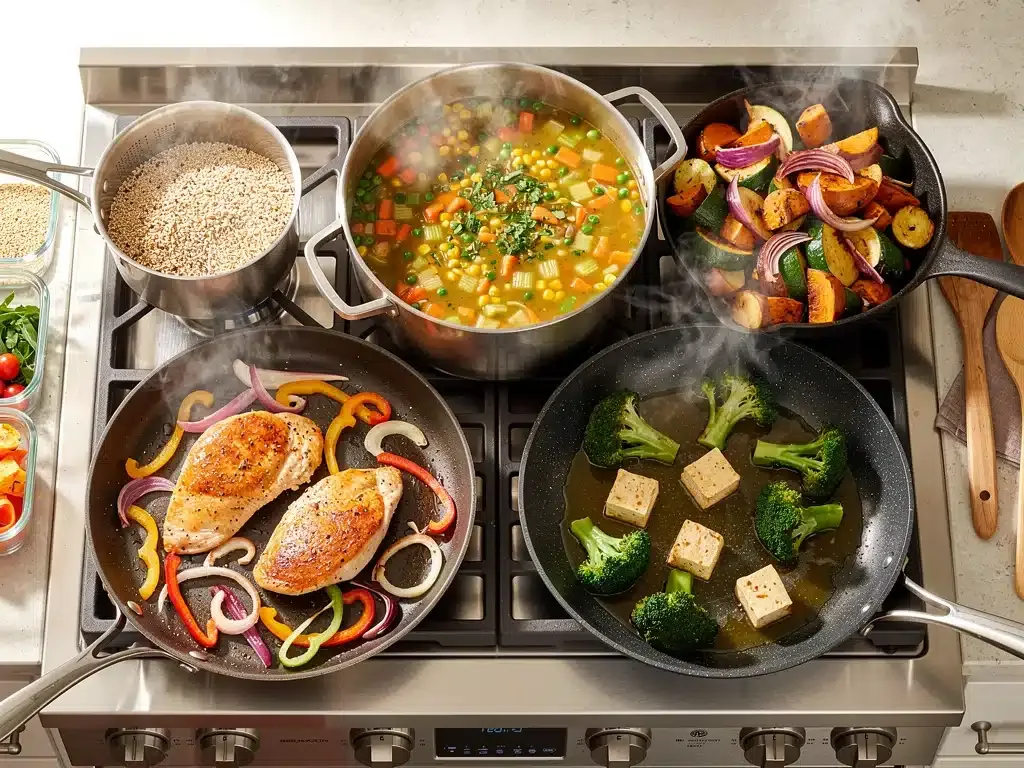
Batch cooking involves preparing multiple servings or meal components at the same time. It can reduce the number of cooking sessions required during the week and make home-prepared meals easier to choose on busy days.
The financial benefit depends on how well the prepared food is actually used. Cooking large quantities that eventually spoil does not save money, so quantities should reflect household size, schedule and safe storage capacity.
Portion planning can also help ingredients last as intended without requiring restrictive eating. The goal is to prepare useful amounts and distribute food across meals rather than assuming one standardized portion is appropriate for everyone.
Maximizing Efficiency with Batch Cooking
Choose several versatile components that can be combined into different meals. Cooked grains, roasted vegetables, beans or properly prepared proteins can be paired with different sauces and side dishes throughout the week.
Do not automatically prepare seven days of refrigerated meals at once. USDA food-safety guidance generally recommends using cooked leftovers within three to four days when refrigerated, so later portions may need to be frozen.
Use shallow containers for rapid cooling and refrigerate or freeze cooked food promptly. Perishable food should generally not remain at room temperature for more than two hours, or one hour when temperatures are above 90°F.
- Versatile components: Prepare ingredients that can support more than one meal.
- Refrigeration window: Most cooked leftovers should be used within 3 to 4 days.
- Freeze later portions: Store meals safely when they will not be eaten within the refrigerator window.
Strategy 3: Utilize Affordable and Nutrient-Dense Ingredients
Budget-friendly meals can be built around foods that provide meaningful nutrition without requiring specialty ingredients. Beans, lentils, eggs, oats, rice, potatoes and frozen vegetables are examples that can work in many different recipes.
Affordability depends on local prices and preparation preferences. Quinoa, for example, may be nutritious but can cost substantially more than rice or oats in some stores, so it should not automatically be described as a budget staple.
Eating Well on a budget is easier when recipes are flexible. Substituting one grain, vegetable or protein for another can help households respond to sales and changing prices while maintaining variety.
Incorporating Legumes and Whole Grains
Beans, lentils and chickpeas provide protein, fiber and other nutrients and can be used in soups, salads, tacos, curries and grain bowls. Dry versions may cost less per serving, while canned versions offer additional convenience.
Whole grains such as oats and brown rice can provide fiber and serve as inexpensive meal bases in many stores. Prices vary, so shoppers should compare unit cost rather than assuming every whole grain is similarly affordable.
Combining legumes, grains and vegetables also creates adaptable meals that can use whatever ingredients are already available. This flexibility can reduce the need to purchase a long list of recipe-specific products.
Strategy 4: Minimize Food Waste Through Creative Reinvention
Reducing edible food waste can directly improve a household food budget because food that is purchased but discarded provides no nutritional or financial value. Planning leftovers before cooking is often easier than finding uses for them afterward.
Leftover cooked ingredients can sometimes be used in soups, wraps, grain bowls, omelets or other dishes, provided they have been stored safely. Reuse should always follow appropriate refrigeration times rather than relying only on appearance or smell.
Waste reduction can also support a more sustainable lifestyle, but a strict “zero-waste” approach is not necessary. Food safety should take priority when an ingredient is spoiled, contaminated or has been stored incorrectly.
Transforming Leftovers into New Dishes
Cooked chicken can be repurposed in salads, tacos or soups, while leftover vegetables may work in frittatas or stir-fries. Changing seasonings and accompaniments can make the same core ingredients feel less repetitive.
Overripe but still safe fruit can be used in smoothies, oatmeal or baked goods. Stale bread that remains free from mold can be converted into breadcrumbs or croutons instead of being discarded immediately.
Not every scrap should be saved for broth. Some vegetable parts may be dirty, bitter, unsafe or simply unsuitable, so use only edible, clean ingredients and follow normal food-safety practices when preparing stock.
- Repurpose cooked ingredients: Use safely stored leftovers in new meals.
- Use ripe produce promptly: Smoothies and cooked dishes can extend usefulness.
- Prioritize safety: Discard spoiled or improperly stored food rather than attempting to reuse it.
Strategy 5: Leverage Freezing for Long-Term Savings
Freezing can extend the useful life of many foods and is particularly helpful when a household buys larger quantities or prepares meals in batches. It can reduce spoilage when food would otherwise remain refrigerated too long.
Freezing does not preserve every food’s texture equally well, so quality should be considered. Soups, stews, cooked grains and many cooked proteins freeze well, while some high-water-content foods may change significantly after thawing.
For Eating Well, the freezer can serve as a practical backup rather than simply long-term storage. Keeping several safe, portioned meals available can reduce dependence on last-minute restaurant or convenience-food purchases.
Best Practices for Freezing Meals and Ingredients
Cooked food should be cooled rapidly and stored in shallow, freezer-safe containers or appropriate packaging. USDA guidance allows hot food to be placed directly into the refrigerator or rapidly chilled before refrigeration or freezing.
Label containers with the food and date so older meals can be used first. Frozen food kept continuously at 0°F remains safe for long periods, although texture, moisture and flavor can decline over time.
Thaw food safely in the refrigerator, cold water or microwave rather than leaving it on the counter. When reheating leftovers, USDA recommends reaching an internal temperature of 165°F.
Strategy 6: Build a Versatile Pantry with Staples
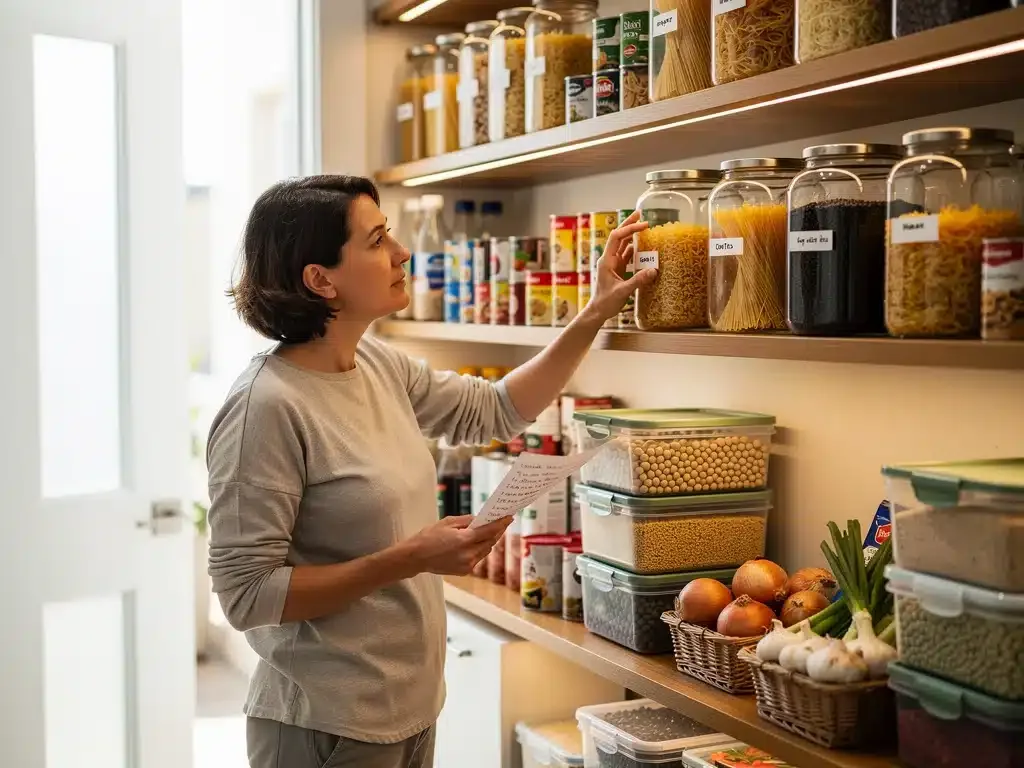
A practical pantry makes it easier to prepare meals without buying every ingredient immediately before cooking. Shelf-stable foods can support quick meals when fresh supplies are limited or an unexpected schedule change occurs.
The most useful pantry is based on foods the household actually eats. Buying large quantities simply because something is inexpensive can create waste if ingredients remain unused until quality deteriorates.
For Eating Well, staples can provide the foundation while fresh or frozen ingredients add variety. Keeping a modest rotating inventory also makes it easier to notice what needs to be used before purchasing duplicates.
Essential Pantry Items for Budget Meal Prep
Useful staples may include pasta, rice, oats, canned tomatoes, beans, lentils, shelf-stable broth and common herbs or spices. Choose quantities according to storage space and how frequently each ingredient is actually used.
Oils and vinegars can support dressings, sauces and cooking, but there is no need to buy multiple premium varieties for basic meal preparation. Select products based on intended use, price and personal preference.
Potatoes, onions and similar foods can also be useful, but storage conditions matter. Rotate pantry items, check dates and use older products first so that having extra food on hand does not turn into unnecessary waste.
| Strategy | Key Benefit |
|---|---|
| Smart Grocery Shopping | Helps reduce unnecessary purchases through meal planning and price comparison. |
| Batch Cooking | Can save preparation time and provide ready-to-use meal components when portions are stored safely. |
| Affordable Ingredients | Supports nutritious meals using flexible foods such as legumes, grains and vegetables. |
| Minimize Food Waste | Helps make better use of purchased food while following safe storage practices. |
Frequently Asked Questions About Eating Well Budget Meal Prep
What is the most effective way to start budget meal prepping?▼ Start with a short meal plan based on food you already have, then create a shopping list for missing ingredients. Prepare only the amount you expect to eat safely, freezing later portions when they will not be used within a few days. How can I make healthy meals taste good on a budget?▼ Use herbs, spices, aromatics, sauces and different cooking methods to add flavor to affordable ingredients. Roasting, sautéing and simmering can create variety without requiring expensive specialty products. Are specific ingredients better for budget meal prepping?▼ Beans, lentils, oats, rice, eggs, potatoes and frozen or seasonal vegetables can be economical choices in many locations. Prices vary, so compare unit prices and choose foods that fit your nutritional needs and actual meal plan. How do I prevent meal prep fatigue throughout the week?▼ Prepare flexible components rather than several identical complete meals. The same grains, vegetables or proteins can be combined with different sauces and seasonings, while freezing portions provides additional variety later. What are common mistakes to avoid when meal prepping on a budget?▼ Common mistakes include buying food only because it is on sale, preparing more than can be safely eaten, ignoring unit prices and leaving cooked food refrigerated for too long. Plan realistic quantities and follow food-safety guidance.Looking Ahead: Sustaining Budget-Friendly Meal Prep in 2026
The strategies outlined for Eating Well provide a flexible framework rather than a guaranteed savings formula. Grocery prices, household size, dietary needs and local availability all influence how much a particular strategy can save.
Current USDA forecasts suggest food-at-home prices will continue rising in 2026, but not every category will move in the same direction. Monitoring prices and adapting meals accordingly can help households respond without compromising basic nutritional priorities.
Ultimately, sustainable budget meal prep combines planning, flexibility and food safety. Buying only useful ingredients, cooking realistic quantities, storing leftovers correctly and making informed substitutions can make healthier home meals more manageable over time.