Optimize Your Sleep Cycle: 3 Proven Hacks for Deeper Rest in 2026
Anúncios
Sleep Cycle habits in 2026 continue to focus on consistent sleep timing, appropriate light exposure, a comfortable bedroom environment and calming pre-sleep routines.
These evidence-based habits can support better sleep, while persistent insomnia, excessive sleepiness or major schedule problems may require professional evaluation.
Anúncios
Sleep Cycle remains an important health topic as researchers continue examining how circadian rhythms, sleep timing, environmental conditions and daily habits influence rest. The strongest practical recommendations still focus on fundamentals rather than dramatic new sleep hacks.
The pursuit of restorative sleep has moved beyond simply counting hours. Sleep timing, regularity, nighttime awakenings and daytime functioning all matter, while consumer devices can provide useful trends without replacing clinical evaluation or directly measuring every stage with laboratory-level accuracy.
This guide examines three practical approaches that can help improve sleep conditions in 2026. They are not guaranteed treatments for insomnia or sleep disorders, but they provide a useful framework for supporting healthier sleep habits and recognizing when professional guidance may be appropriate.
The Urgency to Optimize Sleep Cycle in 2026
Sleep supports physical health, attention, memory, emotional regulation and daytime functioning. When people repeatedly obtain insufficient or disrupted sleep, the effects can extend beyond morning tiredness and influence concentration, mood, performance and overall quality of life.
Anúncios
Healthy sleep is influenced by both duration and regularity. Work schedules, caregiving, stress, medical conditions and environmental factors can interfere with rest, meaning that advice should account for individual circumstances rather than assuming everyone can follow an identical routine.
As daily routines continue changing in 2026, efforts to optimize Sleep Cycle should emphasize sustainable habits. Consistent timing, appropriate light exposure and a suitable bedroom environment remain more practical than promises of instantly increasing deep or REM sleep.
Hack 1: Light Timing and Circadian Alignment
Light is one of the strongest environmental signals influencing the circadian system. Exposure during the daytime supports wakefulness and helps synchronize internal timing, while excessive bright artificial light late in the evening can interfere with preparation for sleep.
The effect is more complex than simply labeling all blue light as harmful. Brightness, timing, duration, distance from the source and the activity performed on a device can all influence whether evening technology interferes with sleep.
For people with diagnosed circadian rhythm sleep-wake disorders, carefully timed light or other interventions may be used clinically. Formal chronotherapy, however, should not be presented as a universal self-help technique for anyone seeking to optimize Sleep Cycle.
Strategic Light Exposure
Spending time outdoors during the day, particularly earlier in the waking period when practical, can provide a strong environmental cue to the circadian system. Daylight intensity is generally much greater than ordinary indoor lighting, even when the weather is cloudy.
In the evening, gradually reducing bright artificial light can support the transition toward sleep. People do not necessarily need to eliminate every electronic device, but lowering brightness and avoiding highly stimulating activities close to bedtime may be useful.
The exact timing of therapeutic bright-light exposure depends on the person’s circadian pattern. Someone with a suspected sleep-wake rhythm disorder should avoid improvising intensive light-based treatment and instead discuss appropriate timing with a qualified sleep or healthcare professional.
- Daytime Light: Spend time outdoors during the day when practical.
- Evening Lighting: Reduce unnecessarily bright light as bedtime approaches.
- Screen Habits: Lower brightness and avoid stimulating digital activities before sleep.
Consistent Sleep Schedule
Going to bed and waking around the same time each day can reinforce the body’s sleep-wake rhythm. The NHLBI also advises limiting large differences between weekday and weekend schedules because substantial shifts can make regular sleep timing more difficult.
Consistency does not mean that every night must be identical to the minute. Social events, work and family responsibilities can occasionally change bedtime, but repeatedly shifting several hours between workdays and weekends may interfere with circadian stability.
A predictable schedule is therefore one of the simplest ways to support Sleep Cycle. People who consistently cannot fall asleep until very late, wake at the desired time or adapt to shift work may need evaluation beyond ordinary sleep-hygiene changes.
Hack 2: Optimize the Sleep Environment for Deeper Rest
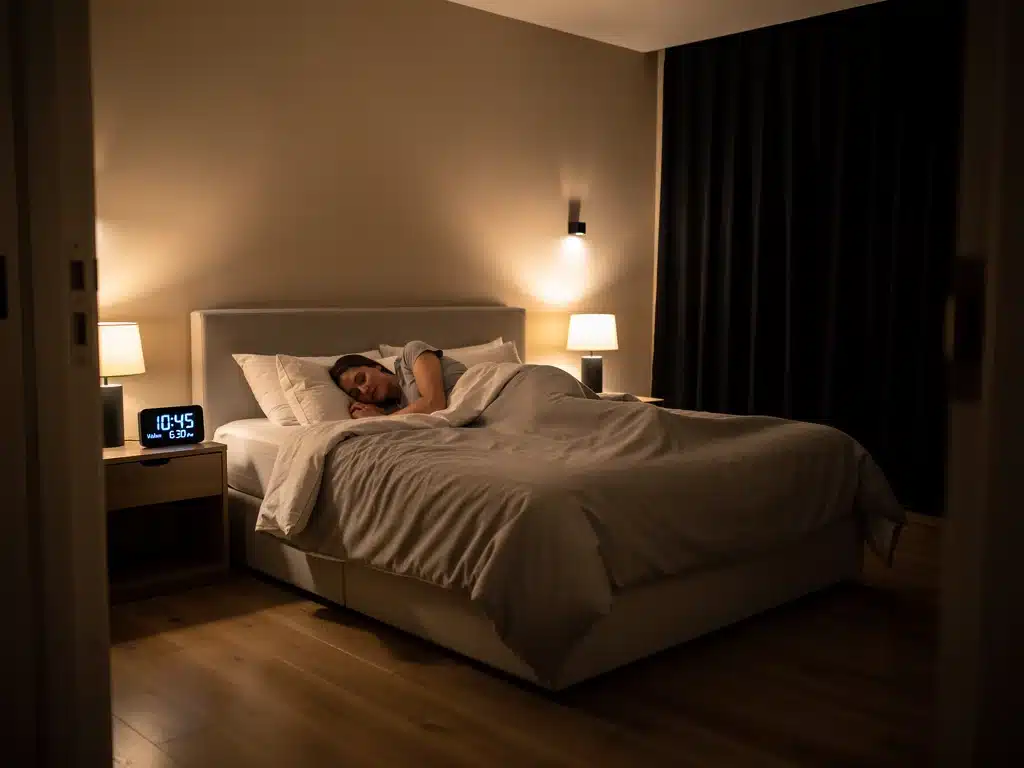
The bedroom cannot force the brain into a particular sleep stage, but environmental conditions can reduce interruptions that make continuous sleep more difficult. Light, noise, temperature, bedding and other physical factors all contribute to how comfortable the sleeping environment feels.
Health guidance commonly recommends keeping the bedroom cool, quiet and dark rather than prescribing one universal temperature. Individual comfort varies according to climate, bedding, clothing, health conditions and personal preferences, so rigid numerical ranges should be interpreted cautiously.
Improving the environment can support Sleep Cycle by reducing avoidable disturbances. However, repeated snoring, breathing pauses, restless legs, chronic insomnia or frequent unexplained awakenings may indicate problems that bedroom adjustments alone cannot address.
Temperature Control and Air Quality
Body temperature naturally changes around sleep, and an excessively hot bedroom can make rest uncomfortable. A room that feels comfortably cool is generally recommended, but no single setting between specific Fahrenheit values is required for every healthy adult.
Ventilation can also improve comfort when a bedroom feels humid, stale or excessively warm. People with allergies or respiratory conditions may need additional environmental measures based on their triggers, although those choices should address a demonstrated need rather than general marketing claims.
Air purifiers can reduce certain airborne particles when appropriately selected and maintained, but they are not established as a universal method for improving sleep. For most people, comfort, ventilation and controlling known allergens are more reasonable starting points.
- Comfortably Cool: Use a temperature that supports comfortable sleep without overheating.
- Ventilation: Maintain appropriate airflow when conditions allow.
- Known Allergens: Address environmental triggers when they genuinely affect breathing or comfort.
Noise and Light Reduction
A dark and reasonably quiet bedroom can reduce environmental disturbances during the night. Blackout curtains, sleep masks or earplugs may help when outside light or noise is difficult to control, provided these options can be used safely.
Continuous background sound may help some sleepers mask unpredictable environmental noise, although white-noise devices are not necessary for everyone. The practical goal is to reduce disturbances that repeatedly wake the sleeper rather than create a perfectly silent environment.
Reducing nighttime disruptions can help support a more continuous Sleep Cycle, but people should avoid interpreting brief awakenings as evidence that their sleep architecture is damaged. Normal sleep includes transitions between stages and occasional short periods of wakefulness.
Hack 3: Mindful Pre-Sleep Routines and Digital Boundaries
The period before bedtime can help create a predictable transition between daytime activity and rest. Quiet activities, reduced stimulation and a consistent routine may make it easier to approach bedtime without immediately carrying work, entertainment or stressful tasks into bed.
This strategy should not be framed as a mandatory “digital detox.” Electronic devices can interfere through light, alerts, emotional stimulation, work demands or time displacement, but the effect depends on how, when and why the technology is being used.
A useful routine for Sleep Cycle therefore focuses on reducing activities that personally keep the individual alert. The objective is not to follow a rigid ritual, but to establish repeatable cues associated with slowing down and preparing for sleep.
The Role of Digital Boundaries
The NHLBI recommends avoiding bright artificial light from sources such as televisions or computer screens during the quiet period before bed. That guidance does not require every person to follow an exact one- or two-hour technology prohibition.
Digital content can also matter independently of light. Work messages, competitive games, upsetting news and endless scrolling may extend wakefulness or increase mental stimulation, while calmer activities on a dimmed device may have a different effect.
People trying to optimize Sleep Cycle can experiment with reducing unnecessary screen use before bed and observe whether sleep onset improves. If technology is required, lowering brightness and disabling nonessential notifications can make the evening environment less stimulating.
- Reduce Brightness: Avoid unnecessarily bright screens and room lighting near bedtime.
- Limit Stimulation: Step away from work, intense games or distressing content when they delay sleep.
- Control Notifications: Silence unnecessary alerts that can interrupt the wind-down period or sleep.
Calming Bedtime Rituals
Quiet activities can create a predictable transition toward bed. Reading, gentle stretching, listening to calm audio, taking a warm bath or practicing a relaxation exercise are common options, but the best routine is one the person actually finds relaxing.
A routine does not need to be elaborate. Repeating a few simple steps at approximately the same time can provide a consistent behavioral signal that active tasks are ending and the sleep period is approaching.
These routines can support Sleep Cycle, but ongoing insomnia should not be treated by endlessly adding sleep-hygiene rules. Cognitive behavioral therapy for insomnia and other clinically appropriate treatments may be considered when sleep difficulties become persistent.
Understanding Sleep Stages to Optimize Sleep Cycle
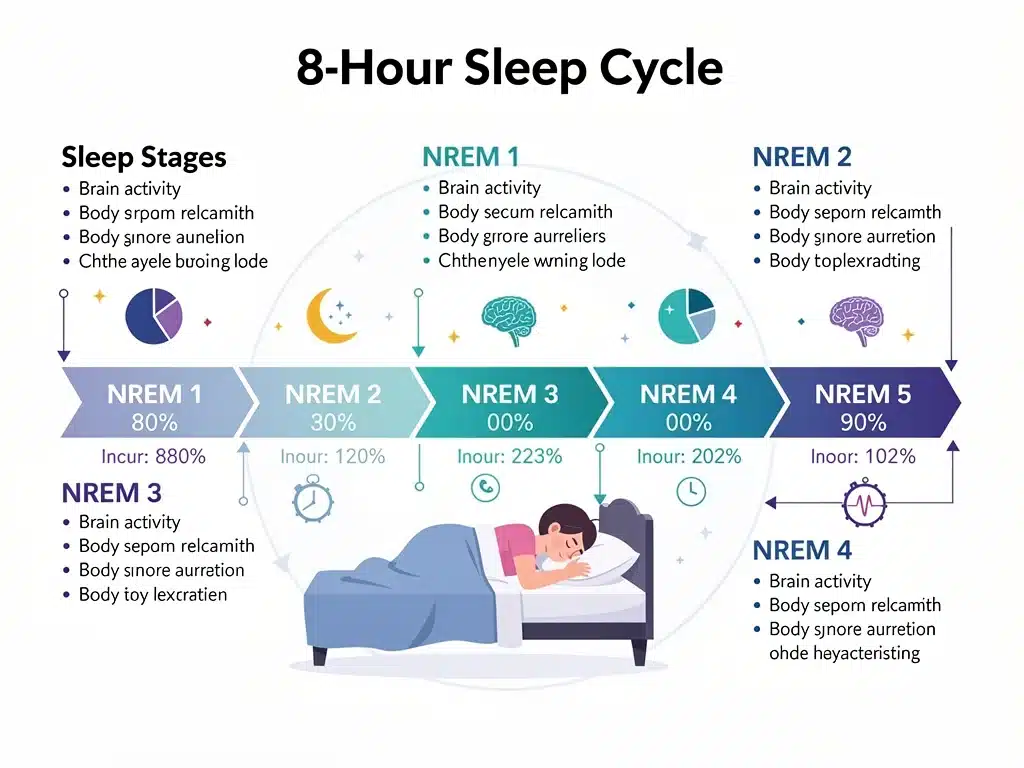
Human sleep progresses through non-rapid eye movement and rapid eye movement stages several times during a typical night. The distribution is not identical from one cycle to the next, and sleep architecture naturally changes across the night and across the lifespan.
Modern classification generally divides NREM sleep into stages N1, N2 and N3, followed by periods of REM sleep. These stages differ in brain activity, muscle tone, eye movements and physiological functions, but none should be treated as the single “best” form of sleep.
Understanding this structure can help readers interpret Sleep Cycle more realistically. Healthy sleep involves repeated transitions among stages rather than maximizing one category, and consumer wearables can only estimate sleep stages rather than directly reproduce laboratory polysomnography.
Non-REM Sleep: From Light to Slow-Wave Sleep

NREM sleep begins with lighter stages and progresses into N3, commonly called slow-wave or deep sleep. Different physiological processes occur throughout NREM sleep, including changes in brain activity, heart rate, breathing and responsiveness to the environment.
N3 is associated with slow-wave brain activity and is considered an important part of restorative sleep. However, statements that every specific repair process occurs exclusively during deep sleep oversimplify a system in which functions are distributed across multiple sleep stages.
Rather than trying to artificially maximize deep sleep, the practical goal is to provide enough opportunity for normal Sleep Cycle architecture to occur. Regular sleep timing and limiting disruptive environmental factors can support that process without targeting a particular percentage.
REM Sleep: An Active Stage of Sleep
REM sleep is characterized by rapid eye movements, distinctive brain activity and substantial reduction in skeletal muscle tone. Vivid dreams are common during REM, although dreaming can also occur during non-REM stages.
REM sleep contributes to important cognitive and emotional processes, including aspects of learning and memory. It should not be described as simply less restorative than deep sleep because NREM and REM perform different and complementary roles.
A healthy Sleep Cycle includes both NREM and REM periods distributed throughout the night. Frequent disruption, inadequate sleep opportunity or certain disorders can alter this pattern, but stage percentages alone are not sufficient to diagnose a sleep problem.
| Key Strategy | Potential Benefit for Sleep Cycle |
|---|---|
| Light Timing | Supports circadian timing when exposure is appropriate for the person’s schedule. |
| Environment Optimization | Reduces avoidable disturbances by keeping the bedroom comfortable, quiet and dark. |
| Pre-Sleep Routine | Creates a predictable transition from daytime activity toward rest. |
| Digital Boundaries | Can reduce bright light, stimulation and bedtime delays when technology interferes with sleep. |
Frequently Asked Questions About Optimizing Your Sleep Cycle
Perspectives on Future Sleep Health
Sleep research in 2026 continues to explore circadian biology, insomnia treatment, wearable technology and personalized approaches to sleep timing. Those developments may improve assessment, but they do not make established behavioral fundamentals obsolete.
Future technology may become better at estimating sleep patterns and identifying potential problems, yet clinical sleep studies remain more sophisticated than consumer trackers. People should avoid interpreting a single wearable score or estimated stage percentage as a medical diagnosis.
The most durable approach to Sleep Cycle remains providing adequate sleep opportunity, maintaining reasonably consistent timing, managing environmental disturbances and seeking professional evaluation when persistent insomnia, excessive daytime sleepiness, breathing problems or major circadian difficulties continue despite healthy habits.